Rodin’s “The Thinker” (1904): Muscles of the Mind
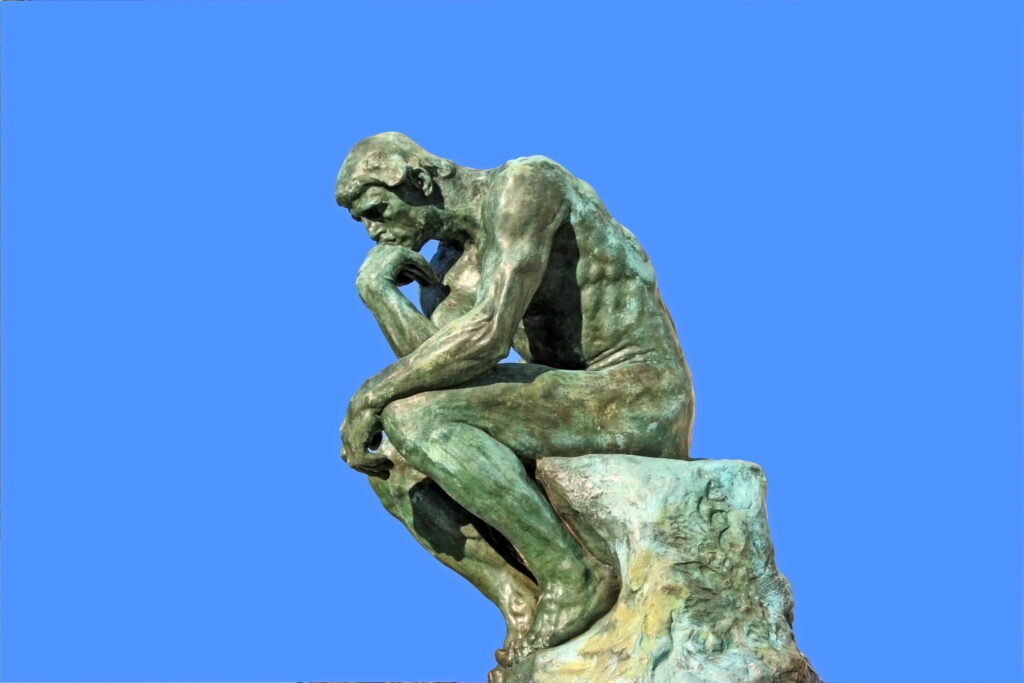
Few sculptures are as instantly recognizable as Auguste Rodin’s The Thinker. Originally conceived as part of a larger composition called The Gates of Hell, this powerful bronze figure has taken on a life of its own — becoming a universal symbol of intellect, struggle, and self-reflection.
Perched atop a rock, the man leans forward, hand to chin, brows furrowed — not in rest, but in intense concentration. His muscular form contradicts the stillness of thought, reminding us that thinking can be a kind of labor, even a form of resistance.
Rodin broke from traditional academic sculpture by celebrating raw emotion and imperfection. The textured surface of The Thinker invites touch and close observation — it’s a sculpture meant to be felt as much as seen.
Contextual Note:
While often seen alone, The Thinker was originally intended to sit above the doors of The Gates of Hell, pondering the fate of those beneath him. Some say he represents Dante himself, or humanity at large.
Quote:
“Nothing is a waste of time if you use the experience wisely.” — Auguste Rodin
OpenAI. (2025, June 16). ChatGPT (June 16 version) [Large language model]. https://chat.openai.com/chat
Adobe Stock. (2025). Thinker isolated over blue[Photograph]. https://stock.adobe.com/search?k=the+thinker&search_type=usertyped&asset_id=4320680
Leave a Reply