Author: rachel.yaholnitsky

  • Park Güell: A Fairytale in Stone and Tile

    Gaudí’s Garden of Imagination
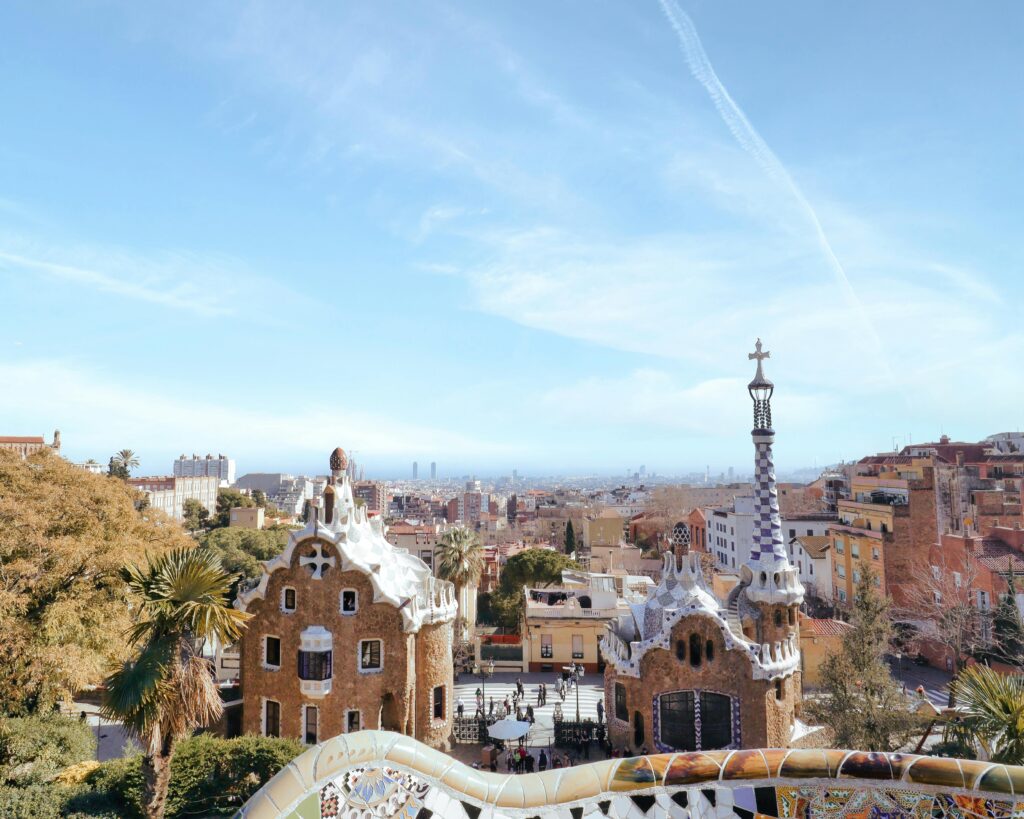
    High on the hills of Barcelona lies one of the most whimsical spaces ever designed: Park Güell, the colorful brainchild of Catalan architect Antoni Gaudí. Originally conceived as a luxury housing development, it evolved into a public park and a surreal playground of modernist artistry.

    From the vibrant mosaic lizard (El Drac) to the serpentine bench that coils along the terrace, Park Güell is a celebration of organic forms, bold color, and architectural fantasy. Gaudí was deeply inspired by nature, and it shows — columns mimic tree trunks, walkways curve like vines, and every surface bursts with texture and light.

    Now a UNESCO World Heritage Site, Park Güell is not just a park — it’s Gaudí’s imagination made tangible, a space where architecture meets dreamscape.


    Fun Fact:
    Gaudí lived in the park for nearly 20 years in what is now the Gaudí House Museum — a testament to how personal this magical project was for him.


    OpenAI. (2025, June 16). ChatGPT (June 16 version) [Large language model]. https://chat.openai.com/chat

    Pexels. (2025). Scenic View of Park Güell in Barcelona, Spain [Photograph]. https://www.pexels.com/photo/scenic-view-of-park-guell-in-barcelona-spain-32532098/
  • From Soup Cans to Stardom: The Rise of Pop Art

    What is Pop Art? An Explosion of Culture and Colour

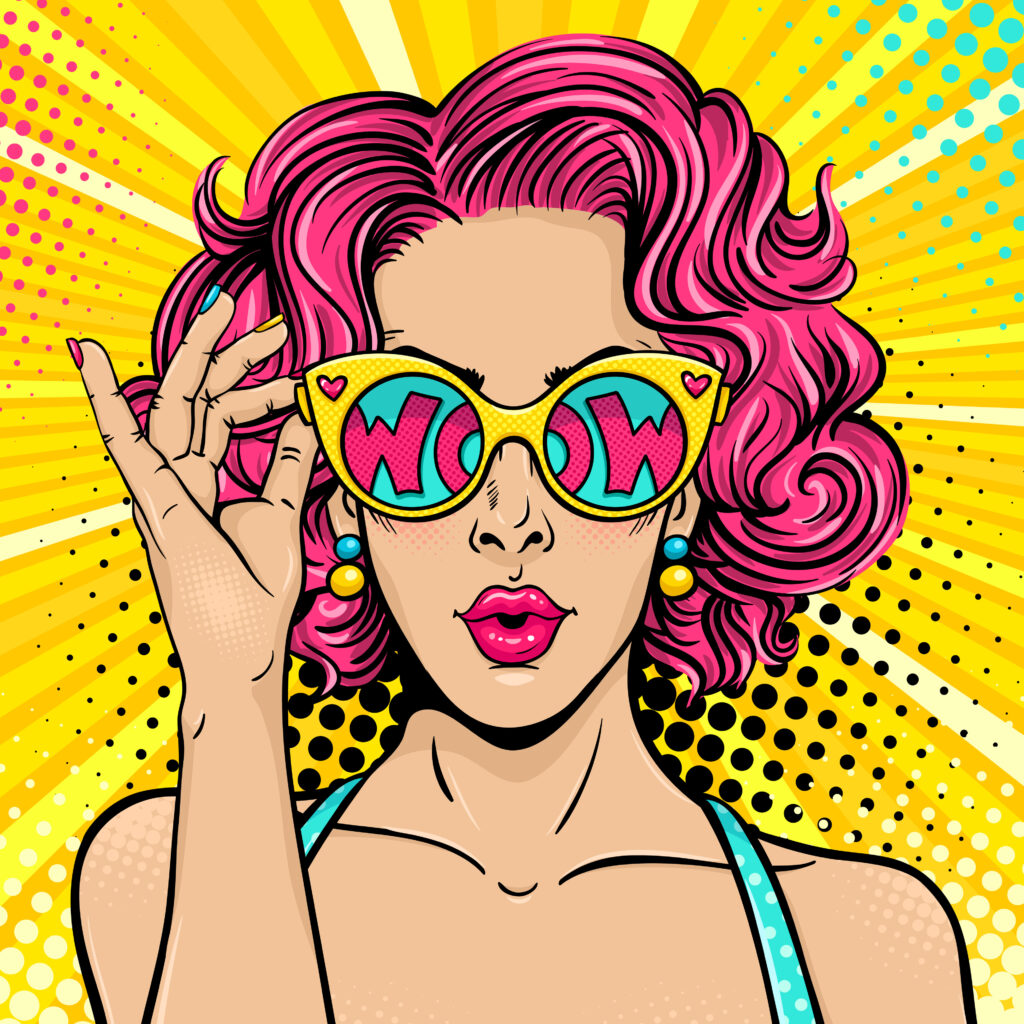
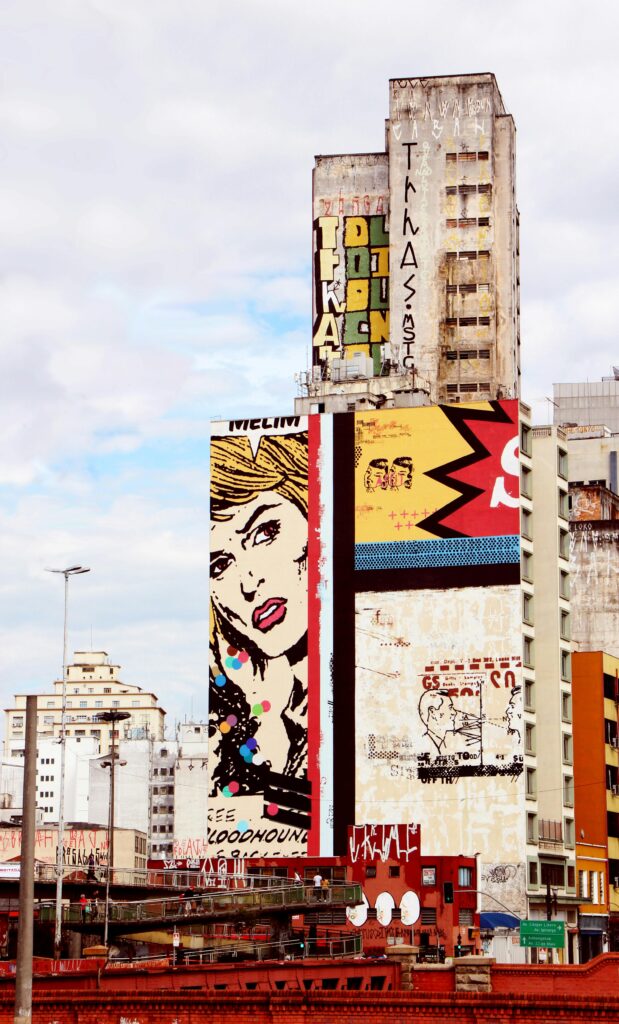
    Pop Art emerged in the 1950s and 60s as a vibrant, cheeky response to consumerism, advertising, and celebrity culture. At its core, Pop Art blurs the line between high and low art — inviting comic books, soup cans, and movie stars into the once-elite world of fine art.

    Artists like Andy Warhol, Roy Lichtenstein, and Richard Hamilton celebrated (and critiqued) the mass production of culture. Warhol’s repeated Marilyns and Campbell’s soup cans didn’t just depict products — they became products themselves, challenging the idea of originality.

    Pop Art was bold, ironic, and often playful. It dared to ask: What counts as art? Who decides? Can something mass-produced still be meaningful?


    Pop Art Characteristics:

    • Bright, punchy colors
    • Repetition and serial imagery
    • Influence from advertising, media, and comic books
    • Celebrity obsession

    Why It Still Matters:
    In the age of TikTok and AI-generated content, Pop Art feels more relevant than ever. It reminds us that culture is constantly recycled — and that art can be both fun and profound.


    OpenAI. (2025, June 16). ChatGPT (June 16 version) [Large language model]. https://chat.openai.com/chat

    Pexels. (2025). Graffiti on White Concrete Building [Photograph]. https://www.pexels.com/photo/graffiti-on-white-concrete-building-1535775/

    Levitskaya, I (2025). Pop Art Illustration [Stock photograph]. Adobe Stock.https://stock.adobe.com/images/wow-pop-art-face-sexy-surprised-woman-with-pink-curly-hair-and-open-mouth-holding-sunglasses-in-her-hand-with-inscription-wow-in-reflection-vector-colorful-background-in-pop-art-retro-comic-style/164712883?prev_url=detail

  • Portrait of Power: A Glimpse into Royal Vanity

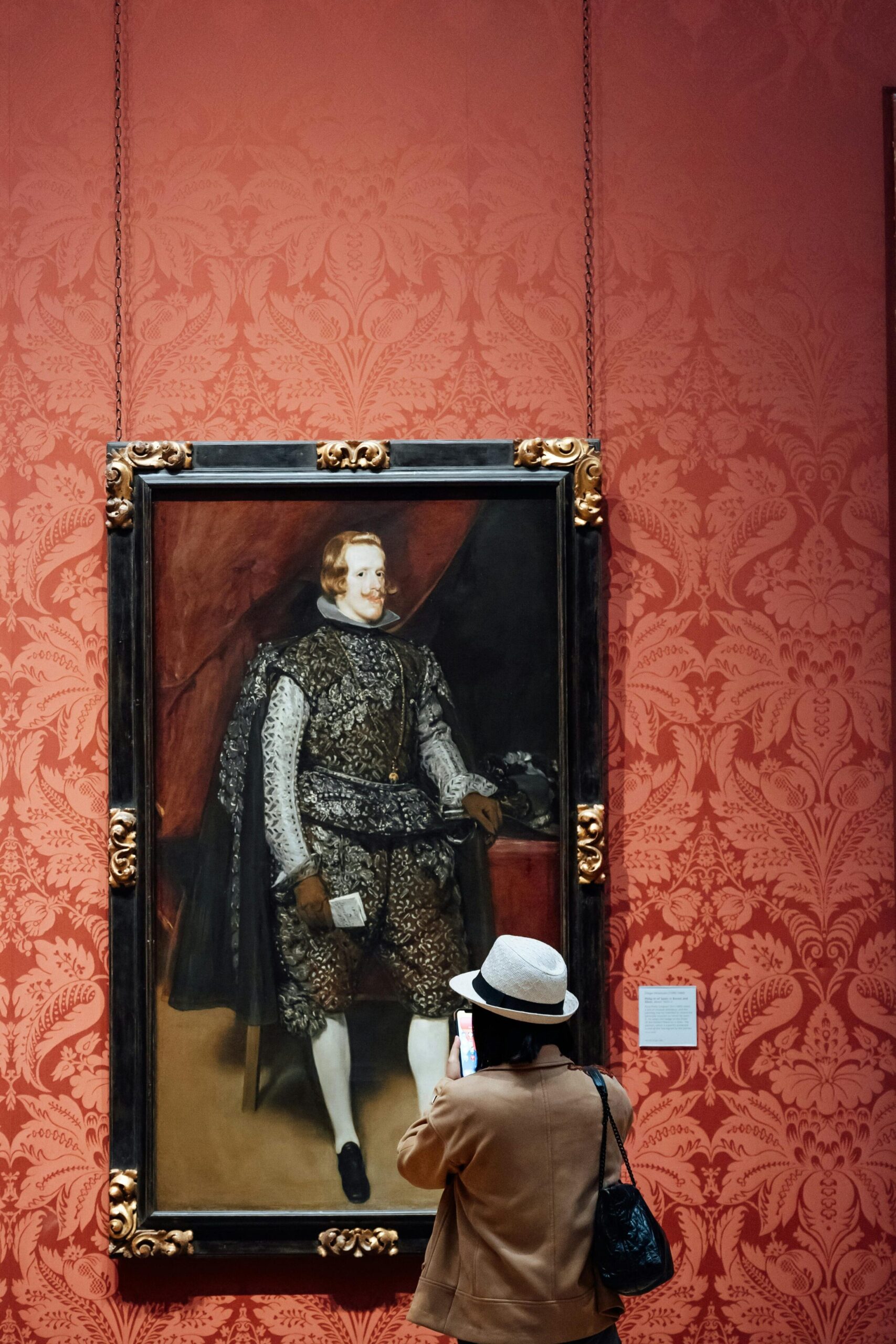
    Portrait of Philip IV of Spain by Diego Velázquez (c. 1628)

    Standing tall in a richly embroidered doublet, Philip IV of Spain presents himself as the epitome of Habsburg power. This formal court portrait, painted by Diego Velázquez, is a masterclass in both flattery and formality.

    Velázquez, the Spanish master of Baroque realism, was more than just a court painter — he was a political craftsman. Here, every detail serves a purpose: the opulent fabrics, the authoritative stance, the subdued background — all designed to elevate the monarch above ordinary men.

    This portrait reflects not only the man but the empire he ruled. Spain in the early 17th century was both a dominant European power and a crumbling dynasty weighed down by decadence and war. This contrast — of strength and vulnerability — is captured subtly in Velázquez’s work.

    Fun Fact:
    Velázquez had exclusive access to the king, something no other court painter was granted at the time. Their relationship was unusually close, reflected in the intimacy of the portrait.


    OpenAI. (2025, June 16). ChatGPT (June 16 version) [Large language model]. https://chat.openai.com/chat

    Pexels. (2025). Art Enthusiast Admiring Historical Portrait [Photograph]. https://www.pexels.com/photo/art-enthusiast-admiring-historical-portrait-30489623/

  • Heaven in Fresco: The Dome as Divine Canvas

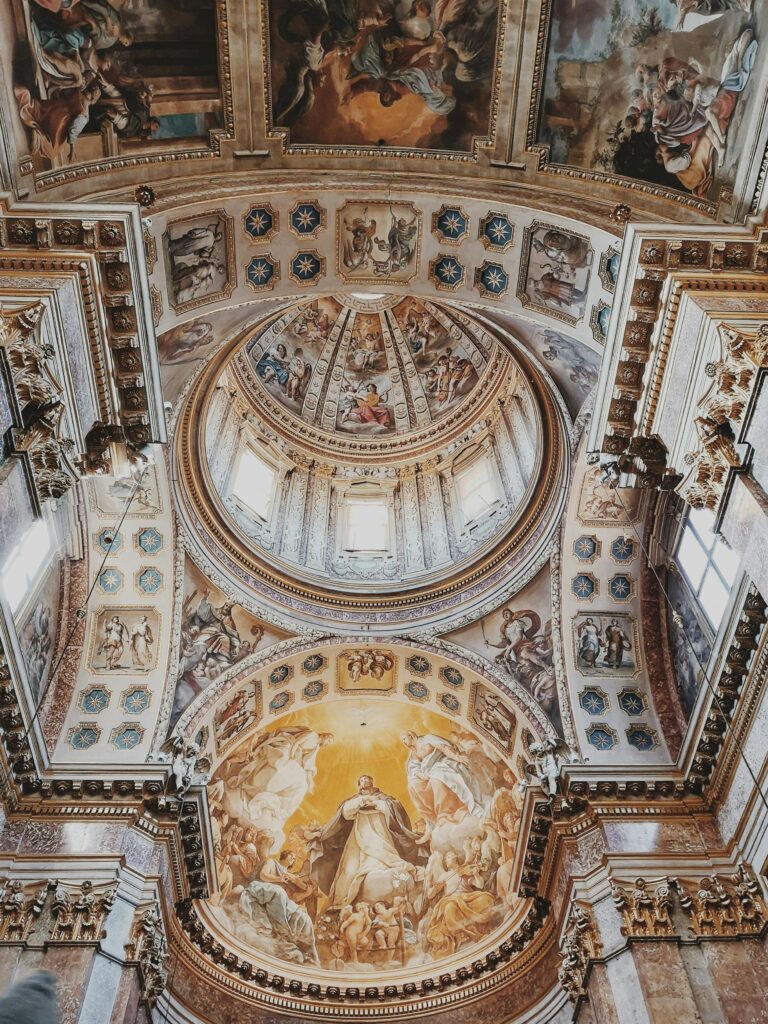
    The Dome of Santa Maria della Vittoria, Rome

    Few places on Earth feel closer to heaven than the dome of Santa Maria della Vittoria. This Baroque marvel, adorned with frescoes by Giovanni Domenico Cerrini and others, immerses visitors in a celestial drama of saints, angels, and divine radiance.

    Designed to uplift the spirit and glorify the Catholic faith, this dome uses the illusionistic technique of quadratura, where architecture and painting blend seamlessly. Golds and whites swirl into clouds; the figures seem to float, bathed in divine light.

    This art is not meant to be observed passively — it’s meant to move you. Baroque art was born of the Counter-Reformation, and works like this were meant to inspire awe, faith, and emotion.


    Artistic Note:
    The symmetry, dynamism, and rich palette reflect the Baroque emphasis on sensory experience and theatricality. Every inch of the ceiling serves as a stage for salvation.


    OpenAI. (2025, June 16). ChatGPT (June 16 version) [Large language model]. https://chat.openai.com/chat

    Pexels. (2025). Low Angle View Of Concrete Building[Photograph]. https://www.pexels.com/photo/low-angle-view-of-concrete-building-3722888/

  • Contemplation in Bronze: Rodin’s The Thinker

    Rodin’s “The Thinker” (1904): Muscles of the Mind

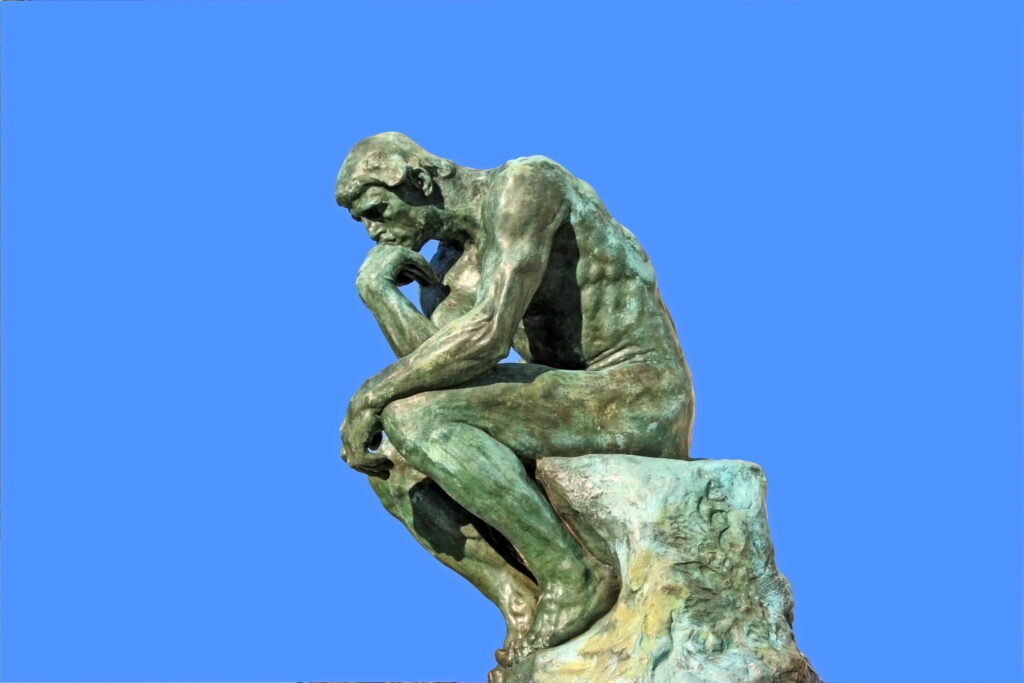
    Few sculptures are as instantly recognizable as Auguste Rodin’s The Thinker. Originally conceived as part of a larger composition called The Gates of Hell, this powerful bronze figure has taken on a life of its own — becoming a universal symbol of intellect, struggle, and self-reflection.

    Perched atop a rock, the man leans forward, hand to chin, brows furrowed — not in rest, but in intense concentration. His muscular form contradicts the stillness of thought, reminding us that thinking can be a kind of labor, even a form of resistance.

    Rodin broke from traditional academic sculpture by celebrating raw emotion and imperfection. The textured surface of The Thinker invites touch and close observation — it’s a sculpture meant to be felt as much as seen.


    Contextual Note:
    While often seen alone, The Thinker was originally intended to sit above the doors of The Gates of Hell, pondering the fate of those beneath him. Some say he represents Dante himself, or humanity at large.


    Quote:
    “Nothing is a waste of time if you use the experience wisely.” — Auguste Rodin


    OpenAI. (2025, June 16). ChatGPT (June 16 version) [Large language model]. https://chat.openai.com/chat

    Adobe Stock. (2025). Thinker isolated over blue[Photograph]. https://stock.adobe.com/search?k=the+thinker&search_type=usertyped&asset_id=4320680

  • Chicago’s “The Bean”: Reflecting Modern Art

    “The Bean” and the Beauty of Public Art

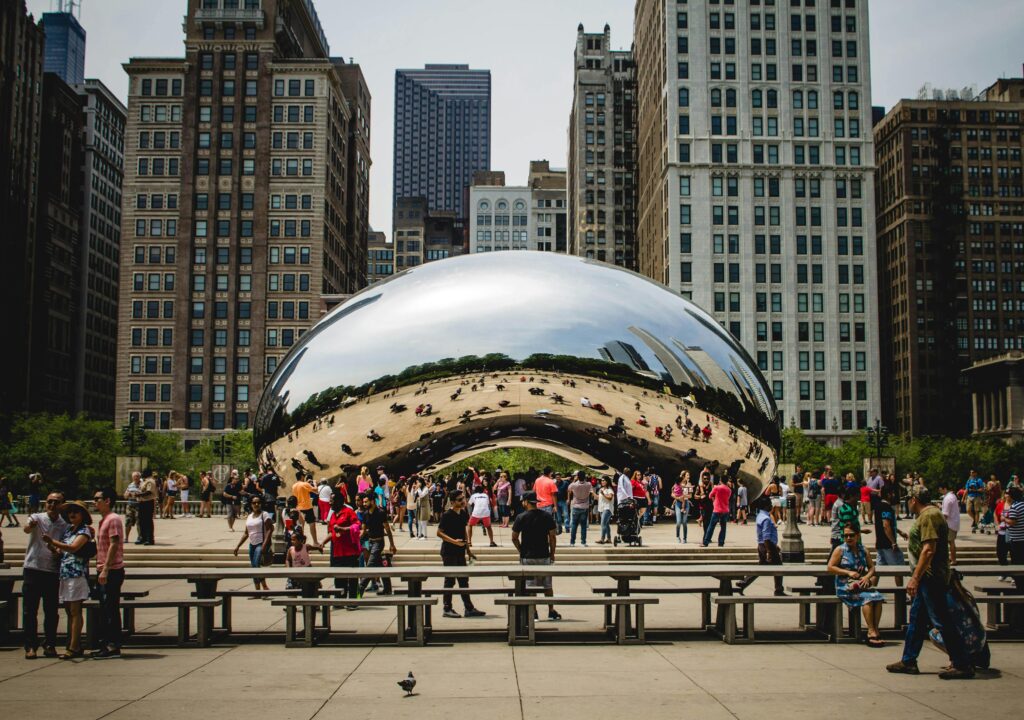
    In the heart of downtown Chicago, surrounded by skyscrapers and curious tourists, sits one of the most beloved pieces of public art in the world: Cloud Gate, affectionately known as “The Bean.”

    Designed by British-Indian sculptor Anish Kapoor, this monumental stainless steel structure was unveiled in 2004. Its seamless mirrored surface reflects the sky, the city, and the people around it — making every interaction unique. Whether you’re taking a selfie, walking beneath it, or simply admiring the skyline warped in its curves, you’re part of the art.

    More than a sculpture, The Bean is a symbol. It captures the fluidity of the urban experience, invites connection, and blurs the boundary between viewer and object. Like much of contemporary public art, it’s designed to be experienced, not just observed.


    Did You Know?
    Despite its nickname, the artist doesn’t love the name “The Bean.” Kapoor has described the sculpture as inspired by liquid mercury — mysterious, organic, and otherworldly.


    OpenAI. (2025, June 16). ChatGPT (June 16 version) [Large language model]. https://chat.openai.com/chat

    Pexels. (2025). Cloud Gate, Chicago Illinois [Photograph]. https://www.pexels.com/photo/cloud-gate-chicago-illinois-876218/