Portrait of Philip IV of Spain by Diego Velázquez (c. 1628)
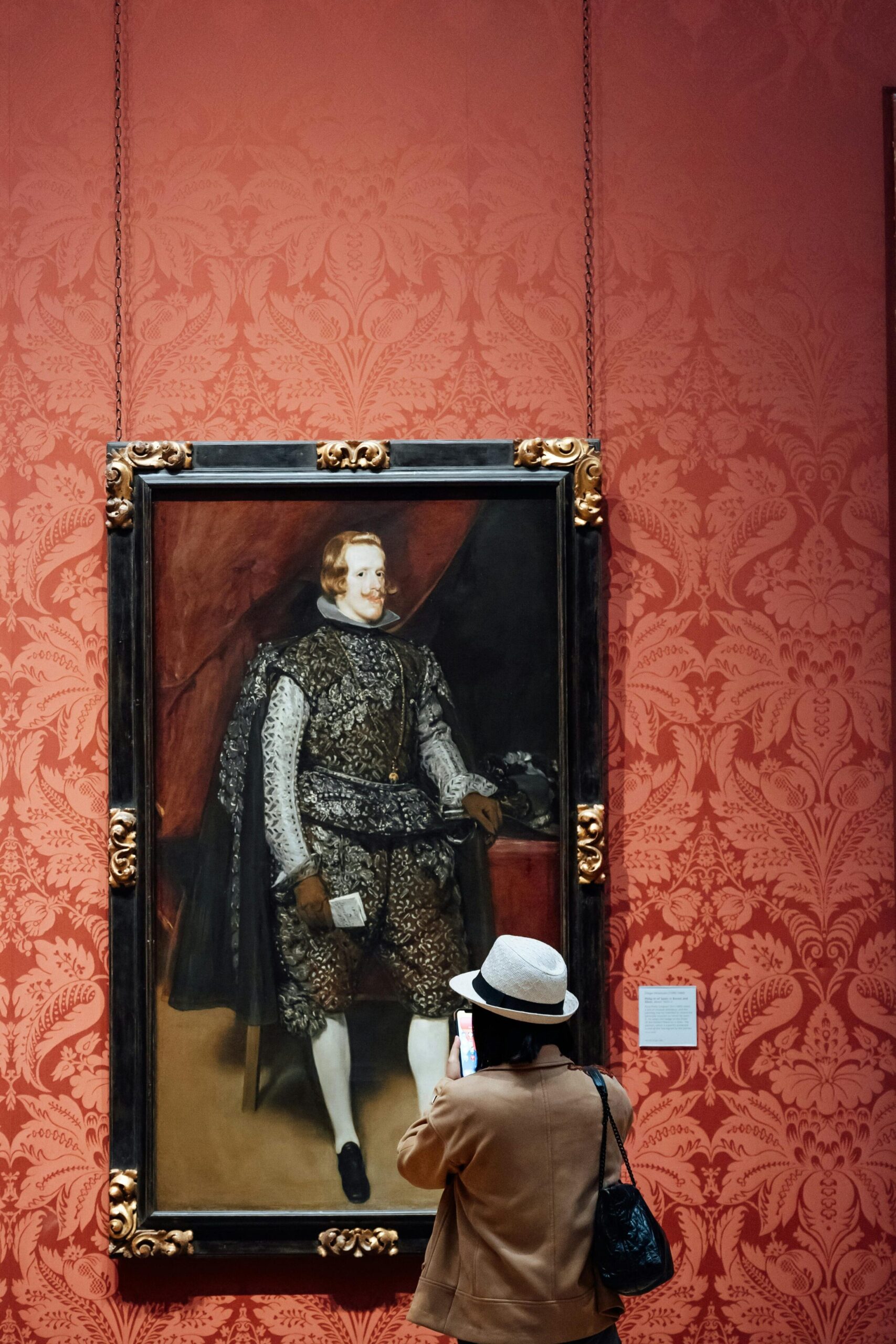
Standing tall in a richly embroidered doublet, Philip IV of Spain presents himself as the epitome of Habsburg power. This formal court portrait, painted by Diego Velázquez, is a masterclass in both flattery and formality.
Velázquez, the Spanish master of Baroque realism, was more than just a court painter — he was a political craftsman. Here, every detail serves a purpose: the opulent fabrics, the authoritative stance, the subdued background — all designed to elevate the monarch above ordinary men.
This portrait reflects not only the man but the empire he ruled. Spain in the early 17th century was both a dominant European power and a crumbling dynasty weighed down by decadence and war. This contrast — of strength and vulnerability — is captured subtly in Velázquez’s work.
Fun Fact:
Velázquez had exclusive access to the king, something no other court painter was granted at the time. Their relationship was unusually close, reflected in the intimacy of the portrait.
OpenAI. (2025, June 16). ChatGPT (June 16 version) [Large language model]. https://chat.openai.com/chat
Pexels. (2025). Art Enthusiast Admiring Historical Portrait [Photograph]. https://www.pexels.com/photo/art-enthusiast-admiring-historical-portrait-30489623/
Leave a Reply